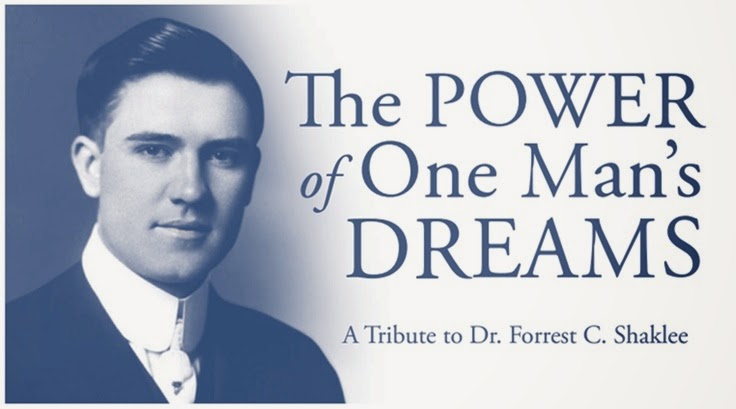
The Enduring Legacy of Dr. Forrest Shaklee: Nature, Thoughtsmanship, and Modern Science
The extraordinary life of Dr. Forrest C. Shaklee, born in November 1894 in Carlisle, Iowa, is a testament to the profound impact of two core beliefs: the inherent healing power of nature and the transformative force of “Thoughtsmanship.” His journey, marked by early adversity, relentless intellectual curiosity, and an unwavering commitment to holistic well-being, laid the foundation for a pioneering legacy in the world of nutritional science and direct selling.
A Childhood Defined by Resilience and Observation
Forrest Shaklee’s life began with a dire prognosis. Diagnosed with tuberculosis at birth, doctors gave him a bleak outlook, predicting he wouldn’t survive past the age of eight. In an era when medical interventions for tuberculosis were limited, his family made a radical decision. They abandoned the soot-laden environment of Carlisle’s coal mines for the cleaner air of northern Iowa. Their treatment philosophy was simple, yet profound: good food, fresh air, and abundant rest. This early experience instilled in young Forrest a deep reverence for nature’s restorative capabilities.
His childhood was largely spent in convalescence, an experience that, rather than limiting him, fostered an acute observational skill. He often spent sunny days outdoors, meticulously observing the natural world. It was during these quiet moments that a fundamental insight took root: “Animals listen to the voice of nature,” he realized, “while men have forgotten how.” This early conviction would become a cornerstone of his life’s work.
As a teenager, doctors confirmed that his tuberculosis was arrested, but the lingering effects left him physically frail. This spurred him to embark on a personal quest, delving into the intricate relationship between physical health, vitality, intelligence, and proper nutrition. This self-study cultivated in him a philosophy of active, positive thinking – the nascent idea of what he would later term “Thoughtsmanship.”
The Seeds of Natural Healing and Early Nutritional Insights
Shaklee’s intellectual development was significantly influenced by the writings of Bernarr MacFadden, a prominent advocate of physical culture and natural living. MacFadden’s assertion that “drugs often mask the symptom, without curing the disease” resonated deeply with Shaklee’s own observations of nature. He became convinced that true healing lay in addressing the root causes of imbalance, rather than merely suppressing symptoms. This conviction naturally drew him to the burgeoning field of chiropractic care, which emphasized the body’s innate healing abilities through spinal manipulation.
He enrolled in the prestigious Palmer School of Chiropractic, then under the leadership of B.J. Palmer. While Shaklee admired Palmer’s visionary leadership, he held a nuanced perspective. He disagreed with Palmer’s rigid insistence that chiropractic was the only effective treatment for physical ailments. Even at a time when such holistic thinking was rare, Shaklee recognized the need for a more encompassing system to preserve an individual’s overall health. This broader vision foreshadowed his later integration of nutrition into his practice.
During his time at Palmer, Shaklee observed a pervasive paradox among many patients: they were often “undernourished and overfed.” This keen observation led him to the crucial conclusion that poor nutrition was a significant contributing factor to disease. He vowed to forever remain conscious of the paramount importance of diet in maintaining robust health, a commitment that would shape his entire career.
Pioneering Nutritional Supplementation and a Brush with Destiny
Upon establishing his chiropractic practice in 1915, Shaklee’s interest in nutrition, then in its infancy as a science, intensified. He devoured every piece of literature he could find, engaging in correspondence with biochemists and other scientists who were conducting groundbreaking research in the field. His relentless pursuit of the “life force” within food culminated in a revolutionary achievement: the creation of what is widely considered the world’s first food supplement in 1915. He struggled to name his invention, eventually settling on “Vitalized Minerals,” a product that would later evolve into “Liqui-Lea.” His colleague, Dr. Casimir Funk, a Polish biochemist, is often credited with coining the term “vitamins” around the same period, highlighting the nascent scientific understanding that Shaklee was at the forefront of.
In 1917, Shaklee expanded his vision, moving to Fort Dodge, Iowa, and opening a comprehensive facility that integrated various medical specialties. Beyond a 15-bed sanatorium, the facility boasted 32 treatment rooms and a diverse team of healthcare professionals, including chiropractors, osteopaths, internists, general practitioners, and surgeons. Crucially, Shaklee ensured his patients adhered to vitamin-rich diets, a practice that was ahead of its time. His clinic quickly became a bustling and prosperous center for healing.
However, a personal crisis would profoundly test Shaklee’s beliefs. In addition to his administrative duties, he dedicated considerable time to the emerging field of X-ray diagnosis. The hazards of excessive radiation exposure were not yet fully understood, and by 1921, Shaklee developed severe ulcerating burns on his left hip and shoulder. A cancer specialist in Chicago confirmed his fears: it was carcinoma. The grim recommendation was amputation of his left arm and leg to halt the spread of the cancer. This devastating diagnosis, at a time when he was a bright young doctor with a wife and two young sons, forced him to confront his own mortality and the very limits of conventional medicine.
“I will live. I will heal,” he declared to his wife, a statement of unwavering faith in his principles. “I know I can do it.” With no other viable option, he gambled his life on the healing power of nature and the strength of his mind. He swiftly sold his clinic and embarked on an intensive, self-designed program of rigorous nutrition, continuous blood analysis, and occasional fasting. His diet consisted solely of the freshest fruits and vegetables, supplemented with large quantities of vitamins and minerals.
Initially, the ulcerated sores showed no signs of improvement, a period of immense psychological challenge. Yet, Shaklee remained steadfast, certain that his healing depended not only on nourishing his body but also on maintaining an unshakeable positive mental attitude. By the end of 1922, a miracle began to unfold: the sores started to heal, replaced by healthy tissue. His strength and energy returned in full. He was alive, his limbs intact, and more profoundly convinced than ever that his ideas on nutrition were not just sound, but revolutionary. Healthy cells, he believed, had triumphed over carcinogenic ones, further solidifying his conviction that good nutrition could profoundly benefit others.
Rebuilding and the Birth of Thoughtsmanship
In 1924, invigorated and reaffirmed, Shaklee reopened a clinic, and his nutritional formulations were now formally packaged and dispensed to patients. However, fate dealt another blow in 1929 when his clinic tragically burned down, destroying all records and a lifetime of research. Everything was lost, except for a single inspirational book: Elbert Hubbard’s Little Journeys. One passage within the book resonated deeply with Shaklee during this period of devastation: “When all else is destroyed, only the product of the mind exists.” This quote underscored his inherent belief in the power of thought and resilience, reinforcing the foundational tenets of his burgeoning philosophy.
Amidst these professional pursuits, Shaklee also became an ordained minister in the Church of Christ in Mason City, Iowa, having previously earned a Doctor of Divinity degree. His sermons, imbued with his philosophy of positive thinking and natural living, were widely attended. His intellectual curiosity extended beyond health, leading him to groundbreaking research, including contributions to the invention of an early form of synthetic rubber. These diverse research activities brought him into contact with some of the era’s greatest minds, including Thomas Edison and Henry Ford, highlighting his wide-ranging influence and respected intellect.
Despite his varied interests, Shaklee ultimately decided to dedicate his primary efforts to nutritional research. His focus shifted from treating the sick to proactively building and maintaining good health, a paradigm shift that was revolutionary for its time. He relocated his family, first to Eugene, Oregon, and later to Oakland, California, where he continued his research and lectured to capacity crowds. During this period, he earned two more academic degrees: Professor of Chiropractic and Doctor of Naturopathy. In 1935, he shared his expertise by teaching biochemistry at the California Chiropractic College.
In 1943, Dr. Shaklee retired from active practice, dedicating himself to writing. In 1945, he began a series of articles exploring the profound influence of the mind on an individual’s health and well-being. This culminated in the formalization of his philosophy, “Thoughtsmanship,” which he copyrighted two years later with the founding of the Shaklee Foundation. He became a sought-after speaker, traveling extensively on the lecture circuit. By 1951, he had published four volumes on Thoughtsmanship, works that earned him a Doctorate in Philosophy from Commonwealth University in Los Angeles. Many of his popular lectures were broadcast by radio stations in San Francisco and Oakland, spreading his message of positive living and natural health to a wider audience.
The Birth of Shaklee Corporation and a Lasting Vision
In the autumn of 1955, at the age of 62, Dr. Shaklee shared a new aspiration with his two sons, Forrest Jr. and Lee. He expressed a desire to establish a business that would directly address the public’s growing interest in nutrition and make food supplements widely accessible. On April 1, 1956, just six months later, the Shaklee Corporation officially opened its doors. This was a bold venture in an America that, at the time, largely believed itself to be the best-fed nation in the world. Dr. Shaklee understood that every potential customer would need education before they would embrace his products. His guiding principle for the fledgling company was simple yet powerful: “We’ll teach some and they’ll teach others.” This direct-selling model, fueled by a commitment to education and personal connection, proved to be a phenomenal success, writing a new chapter in business history.
The Shaklee Corporation, built by the research, science, devotion, and tireless efforts of Dr. Shaklee and his sons, transformed a visionary idea—the direct selling of health and related products—into a thriving enterprise. The company’s very essence was, and remains, powered by one man’s unwavering belief in the inherent wisdom of nature and the profound influence of Thoughtsmanship.
Modern Studies and the Continued Relevance of Shaklee’s Vision
Decades after Dr. Forrest Shaklee’s passing in 1985, his foundational principles continue to resonate, and the company he founded remains a significant player in the wellness industry. Shaklee Corporation has continued to invest in scientific research, aiming to validate the efficacy of its products and uphold its founder’s commitment to science-backed nutrition.
One of the most notable bodies of research is the Shaklee Landmark Study, conducted in collaboration with researchers from the University of California, Berkeley. This ongoing cross-sectional study has examined the long-term health benefits associated with consistent Shaklee supplement use. Initial findings, and subsequent follow-up studies, have provided compelling data.
Key insights from the Landmark Study indicate that long-term Shaklee supplement users, compared to non-supplement users and even those using single multivitamins from other brands, demonstrate:
- Higher Levels of Key Nutrients in Blood: Users show significantly elevated concentrations of essential nutrients such as iron, folate, and vitamins A, C, D, and E, as well as B12 and Omega-3 fatty acids. This directly addresses the common skepticism about nutrient absorption from supplements, demonstrating that Shaklee products are effectively utilized by the body.
- Improved Markers of Heart Health: The study observed more favorable concentrations of high-density lipoprotein (HDL) cholesterol (often called “good” cholesterol) and lower levels of triglycerides and low-density lipoprotein (LDL) cholesterol (“bad” cholesterol). These are crucial indicators of reduced cardiovascular risk.
- Better Markers of Cognitive Health and Inflammation: Shaklee users exhibited significantly lower levels of homocysteine (a marker linked to heart disease and cognitive decline) and C-reactive protein (CRP), a key indicator of inflammation in the body.
- Healthier Blood Sugar Control and Weight Management: The research revealed improved glycemic control, with lower glucose, insulin, and HbA1c levels, alongside a lower Body Mass Index (BMI) in Shaklee supplement users.
- Reduced Risk of Chronic Diseases: The studies also suggested a significantly reduced risk of elevated blood pressure and self-reported diabetes among long-term Shaklee supplement users.
These studies, published in peer-reviewed journals, provide scientific validation for many of Dr. Shaklee’s early insights into the profound impact of comprehensive nutrition on overall health and disease prevention. They underscore the concept that consistent, high-quality supplementation can fill nutritional gaps and contribute to better health outcomes over a lifetime.
Beyond the Landmark Study, Shaklee continues to conduct research into specific product lines and ingredients. For example, studies on their polyphenol-based products have explored their antioxidant and anti-inflammatory properties, showing potential to protect cells from damage and slow aspects of cellular aging, including effects on telomere length – a cutting-edge area of aging research.
In addition, Shaklee has engaged in unique partnerships, such as a collaboration with NASA in 1993, for research and development of rehydration fluids for astronauts, showcasing their commitment to scientific advancement and real-world application of their products.
Dr. Forrest Shaklee’s vision, born from personal struggle and a deep connection to nature, was remarkably prescient. He intuited the critical role of nutrition and mindset in health long before mainstream science fully embraced these concepts. Today, the enduring legacy of the Shaklee Corporation, backed by modern scientific research, continues to advocate for a holistic approach to wellness, demonstrating that his dual beliefs in “Nature’s ability to heal” and “Thoughtsmanship” remain as relevant and powerful as ever. His life story is not just a historical account but an inspiring blueprint for how personal conviction, combined with scientific inquiry, can transform the lives of countless individuals.
